

Another all-timer from the ONS this morning, where the headline data paints one picture, yet the details tell a very different story.
Headline unemployment fell to 4.7% in the three months to August, from 4.9% in July, which looks fairly promising at face value.
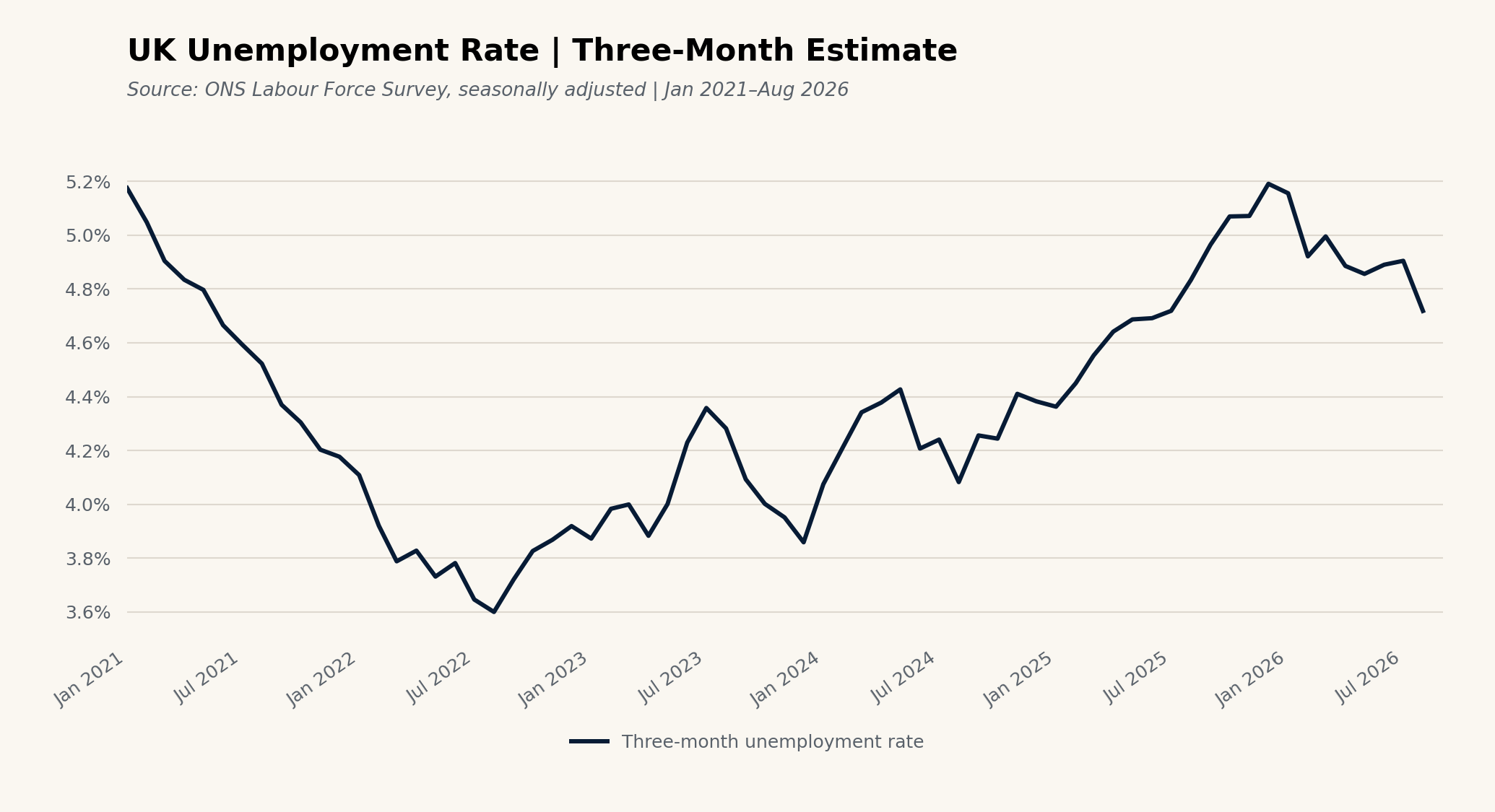
The only problem is, this decline in joblessness almost certainly didn’t happen, and is yet another reflection of the ONS’ inability to produce accurate statistics on the UK economy.
Digging into the report, one sees that the single-month unemployment rate fell from an estimated 4.9% in July, to an estimated 4.3% in August, thus dragging the three-month rolling figure lower, as outlined above.
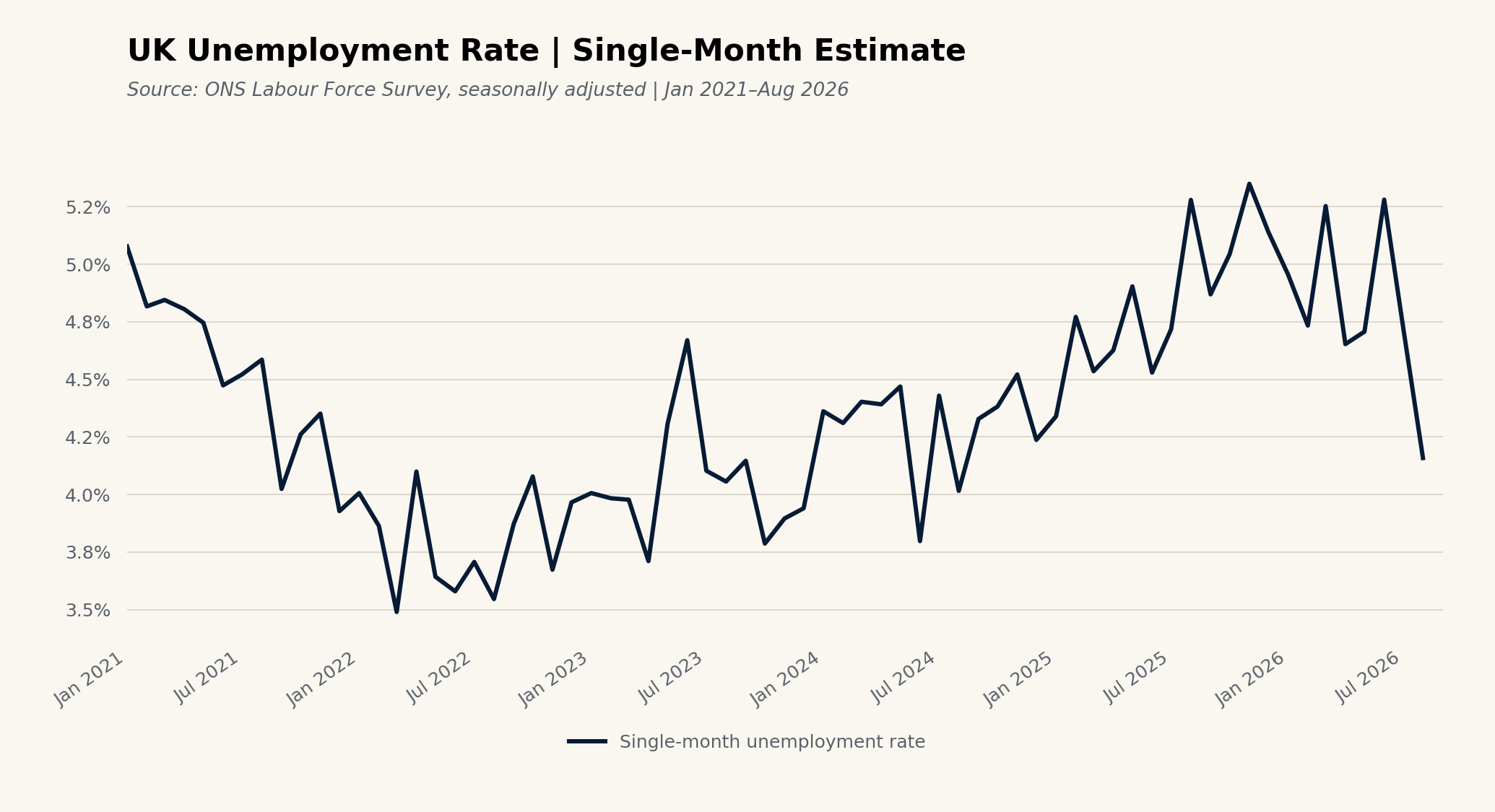
Such an 0.6pp decline in joblessness in the space of just one month, however, is entirely implausible. Some rather quick ‘back of the envelope’ maths suggests that for such a decline to be legitimate, assuming the labour force remained at a stable size, the economy would’ve had to have added 200,000 jobs in August alone! The UK economy hasn’t added that many jobs in a single month since the recovery from the pandemic over five years ago.
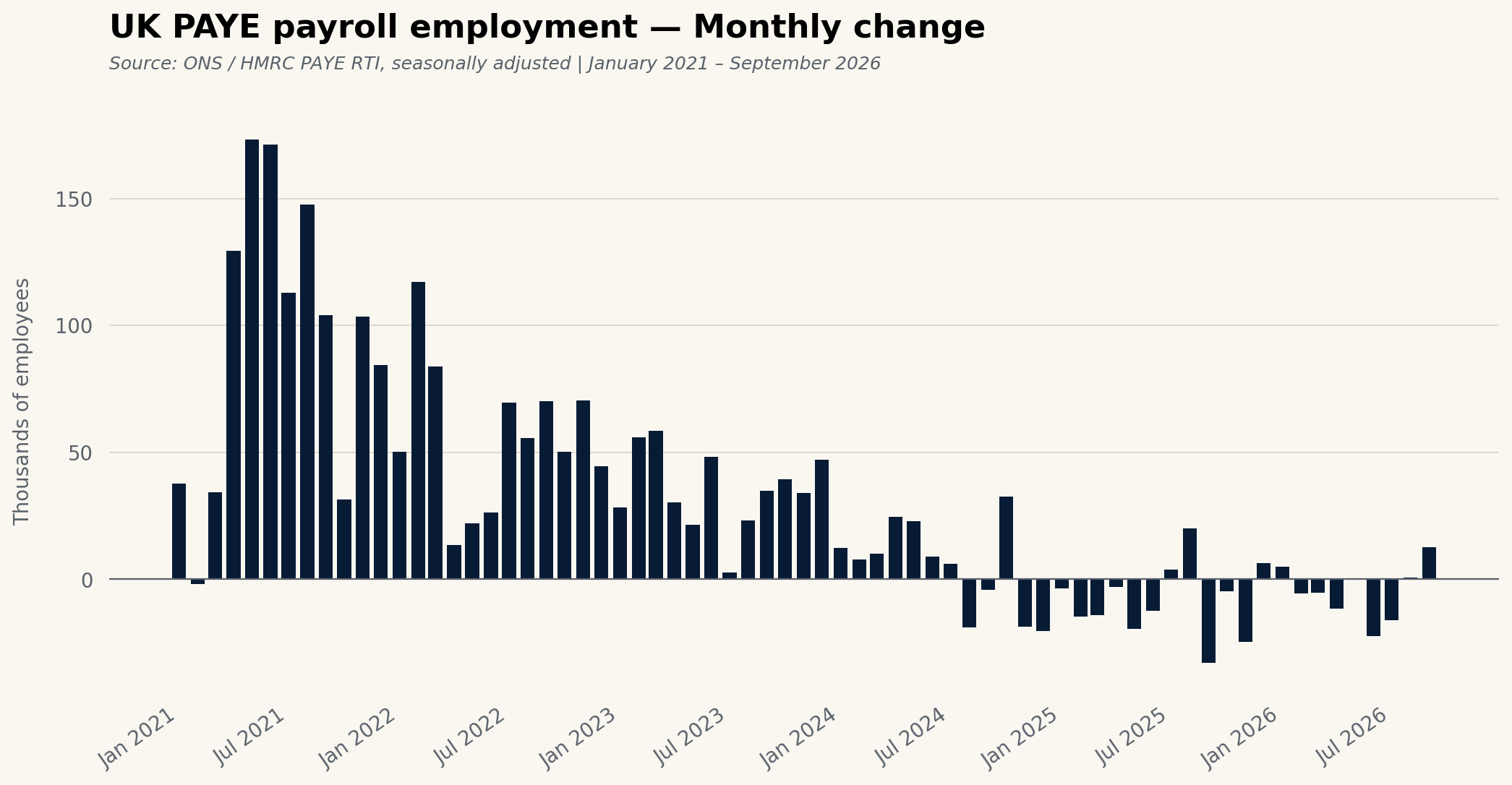
Worse still, the ONS’ own data tells us that such a surge in hiring didn’t take place. In fact, per the latest PAYE payrolls data, employment rose just 1k (yes, one thousand) in August. Even by the dismal standards of the folk in Newport, being out by a factor of 200 must be a new low.
Anyway, it wasn’t only the unemployment figures that underscored the fragility of the UK labour market. Vacancies, for instance, fell below 700k September for the first time since early-2021, while public sector earnings growth continues to run at roughly double that of the private sector, a situation that remains unstable, and which quite obviously can’t be blamed on the ‘base effects’ that the ONS continue to site.
None of this is to say that the Bank of England won’t tighten policy in early-November. In fact, at this point, I’m not sure there’s anything which could dissuade the MPC from delivering a 25bp hike next month, or from following that with another such move at the February meeting.
Still, those hikes are clearly not without risk, given the fragile underlying state of the UK economy, lacklustre demand dynamics, and the still-low risks of second-round inflationary effects emerging. Ultimately, it would be folly to allow this morning’s jobs data to lull oneself into a false sense of security.
Disclaimer
The information and opinions contained in this publication are provided for informational and educational purposes only and should not be construed as investment advice, a recommendation, or an offer to buy or sell any financial instrument.
All views expressed are solely those of the author and are subject to change without notice. While every effort is made to ensure the accuracy of the information presented, no representation or warranty is made as to its completeness or accuracy.
Readers should conduct their own research and, where appropriate, seek independent professional advice before making any investment or financial decisions. The author accepts no liability for any loss arising from reliance on the information contained in this publication.
Any references to specific securities, asset classes, markets, or investment strategies are provided solely for illustrative and analytical purposes and do not constitute investment recommendations.