

In the current US macro environment, every man and his dog seems to be descending into some sort of hysteria about the levels of key economic variables. Yet, little attention is being paid to the direction of travel of those same indicators.

Take inflation, for instance. I’ve lost count of the number of times that I’ve been told how 65 months of above target inflation is an issue, and how that fact means Fed Chairman Warsh has no credibility. Quite why 60 months of above-target inflation under Chair Powell wasn’t an issue, there doesn’t seem to be an answer to - besides the obvious politically-motivated one.
There’s more here, in that the data doesn’t bear out what these critics are saying. Yes, having inflation run north of target for 5 years is not a good look for any central bank, and is not something I’ll sit here and defend.
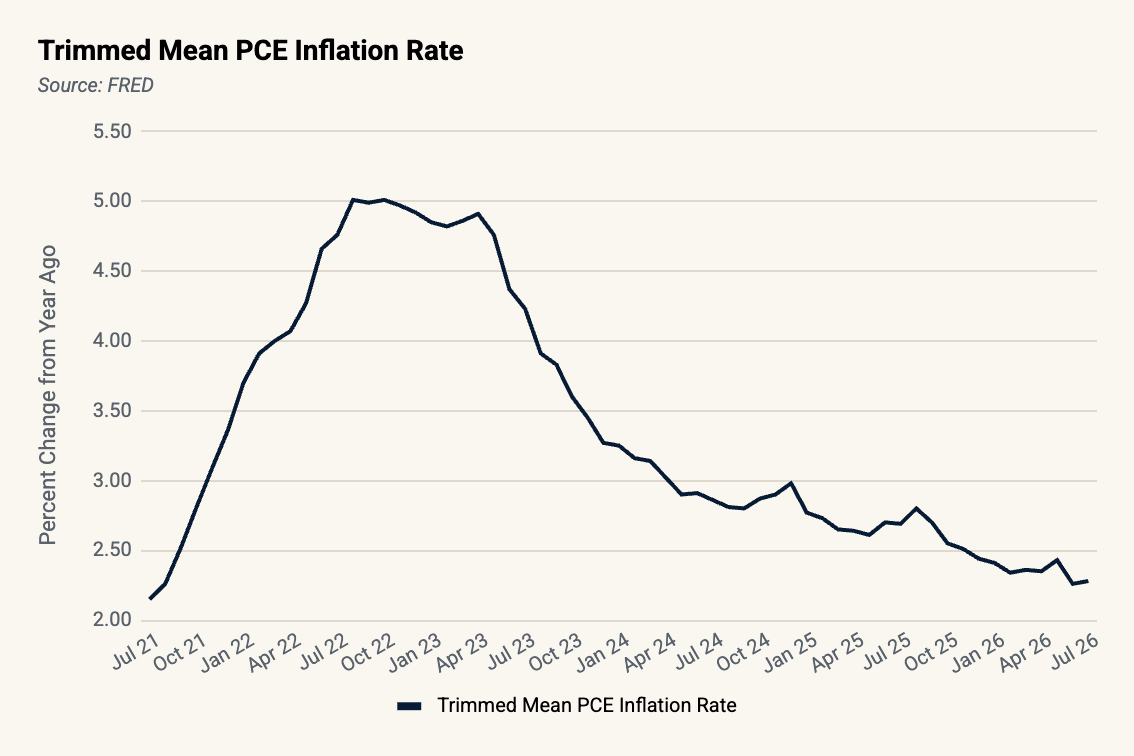
However, it became common knowledge some years ago that, for all intents and purposes, 2% is now a floor not a ceiling. And, progress is being made towards that floor - core CPI, for instance, ran at 2.5% YoY in July, down from 3.1% YoY a year prior. While the core PCE metric has ticked higher, this owes almost entirely to quirks in the methodology, which will be resolved at the end of next month. The trimmed mean PCE metric, a more accurate gauge of underlying price pressures, has showed progress, falling from 2.7% YoY to 2.3% YoY in the space of twelve months. That latter point, clearly, being a rounding error away from the inflation aim.
As for the fiscal side of the ledger, again folk are getting caught up on levels, and losing sight of reality. Endless column inches have been taken up about US national debt exceeding $40tln - a completely arbitrary number - yet I don’t seem to remember ever having seen a similar story about nominal GDP exceeding such an arbitrary figure. Bad news sells, I guess!
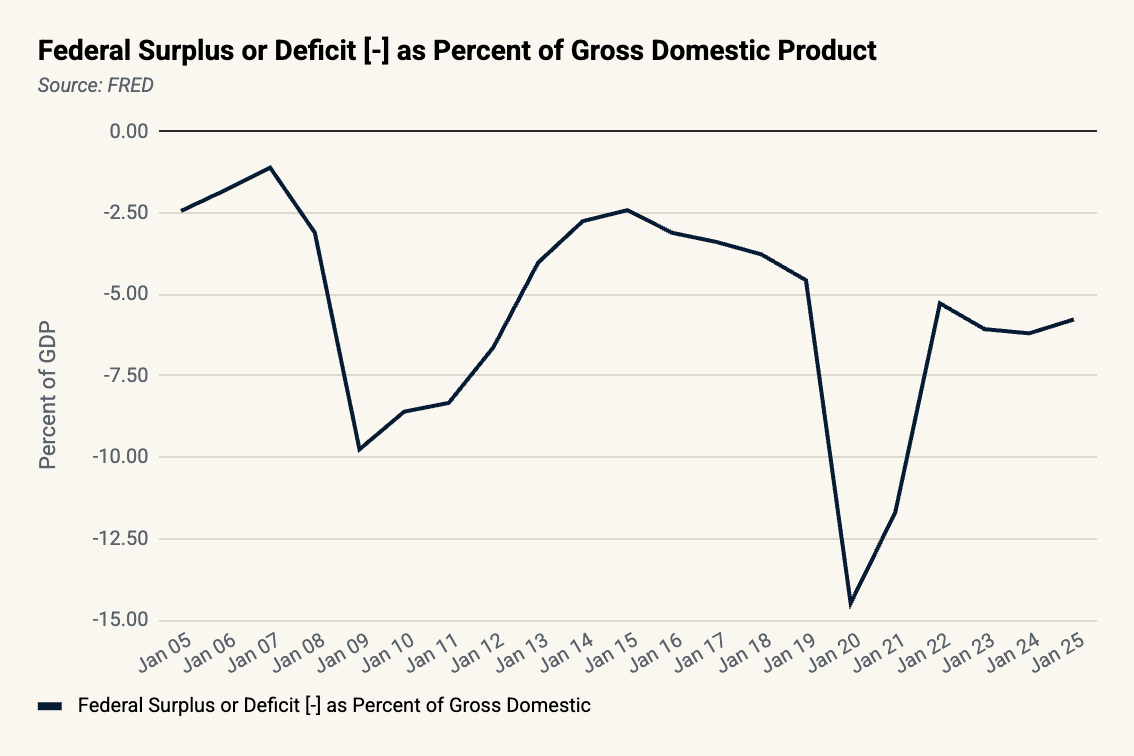
The thing is, the news isn’t as bad as is being made out. Again, a 6% budget deficit is far from an ideal situation, but that situation has improved under Secretary Bessent compared to where it was under Secretary Yellen, who faced scant criticism. The overall deficit narrowed from 6.2% at end-24 to 5.7% at end-25, with the CBO forecasting a further narrowing this year. The primary deficit has also narrowed substantially, from 3.3% of GDP in 2024, to 2.1% in 2025. Again, numbers that need to be addressed, but also figures that are moving in the right direction.
So, what’s going on here?
Largely, it seems to be yet another case of market participants - who by now should know better - letting their emotions, and their political biases get the better of them. A myopic ‘Bessent bad, Yellen good’ or ‘Warsh bad, Powell good’ view serves nobody well, and does not reflect a reasoned or rational assessment of the facts in hand.
Given recent history on this front, I’d not bank on the hysteria in question dying down particularly soon. This does, however, provide potential opportunities, given that the ‘Fed must hike to preserve credibility’ and ‘US budget deficit spells doom’ narratives are quite obviously bunkum.
Ultimately, financial markets don’t trade on levels at which particular economic variables may sit, but do trade on the changes in those variables. So far as the budget, and the inflation, outlooks are concerned, things look considerably less worrying than current market pricing would imply. Fading hawkish Fed expectations, which continue to be dragged around by energy prices, and fading weakness at the long-end of the curve, where an activist Treasury approach can provide a helping hand, look reasonable to me.
Disclaimer
The information and opinions contained in this publication are provided for informational and educational purposes only and should not be construed as investment advice, a recommendation, or an offer to buy or sell any financial instrument.
All views expressed are solely those of the author and are subject to change without notice. While every effort is made to ensure the accuracy of the information presented, no representation or warranty is made as to its completeness or accuracy.
Readers should conduct their own research and, where appropriate, seek independent professional advice before making any investment or financial decisions. The author accepts no liability for any loss arising from reliance on the information contained in this publication.
Any references to specific securities, asset classes, markets, or investment strategies are provided solely for illustrative and analytical purposes and do not constitute investment recommendations.